
The Bread of Resilience: Understanding Arizona’s Iconic Fry Bread
From a symbol of historical hardship to a beloved cultural icon, discover the story behind Arizona’s legendary fry bread. Whether you’re craving a savory Navajo taco or a sweet, cinnamon-dusted treat, we’re exploring the history, the community significance, and the must-visit spots to experience this golden, crispy staple of the Southwest. Dive into a taste of Arizona’s resilient spirit.
THE TABLEJUNE 2026


Introduction to Fry Bread
If you are new to Arizona, your culinary journey is likely just beginning. You’ve probably already encountered the desert’s famous sunsets, its unique saguaro-studded landscapes, and perhaps a few local tacos. But there is one staple you will encounter at community fairs, roadside stands, and local restaurants that is more than just a meal—it is a piece of living history.
This is Indian fry bread.
While it might look like a simple piece of fried dough at first glance, fry bread holds a profound place in the cultural fabric of Arizona. To understand and appreciate it, you must look past the crisp, golden exterior and into the history of the Indigenous peoples who turned a symbol of hardship into a testament of survival and pride.
A Legacy Born from Hardship
To truly appreciate fry bread, you have to understand its origins. The history of this dish is inextricably linked to the "Long Walk" of 1864—a period of immense trauma where the United States government forced the Navajo people from their traditional lands in Arizona to Bosque Redondo in New Mexico.
Separated from their ancestral food sources—crops like beans, corn, and squash that had sustained them for centuries—the Navajo were forced to rely on government-issued rations. These were far from traditional: bags of white flour, processed sugar, salt, and lard.
Faced with the threat of starvation, the Navajo people did what they have done for generations: they adapted. Using these unfamiliar, nutrient-poor staples, they created a bread that could be made easily over an open fire. Fry bread was born in a time of desperation, but it survived as a symbol of endurance. Today, it stands as a complex, often debated, but deeply revered icon of Native American resilience.
The Fry Bread Experience: How to Eat It
One of the most important things for a newcomer to know is that fry bread is incredibly versatile. It is not a monolith; it’s a canvas. Depending on where you go, you’ll find it served in two primary ways: savory and sweet.
The Navajo Taco (The Savory Classic)
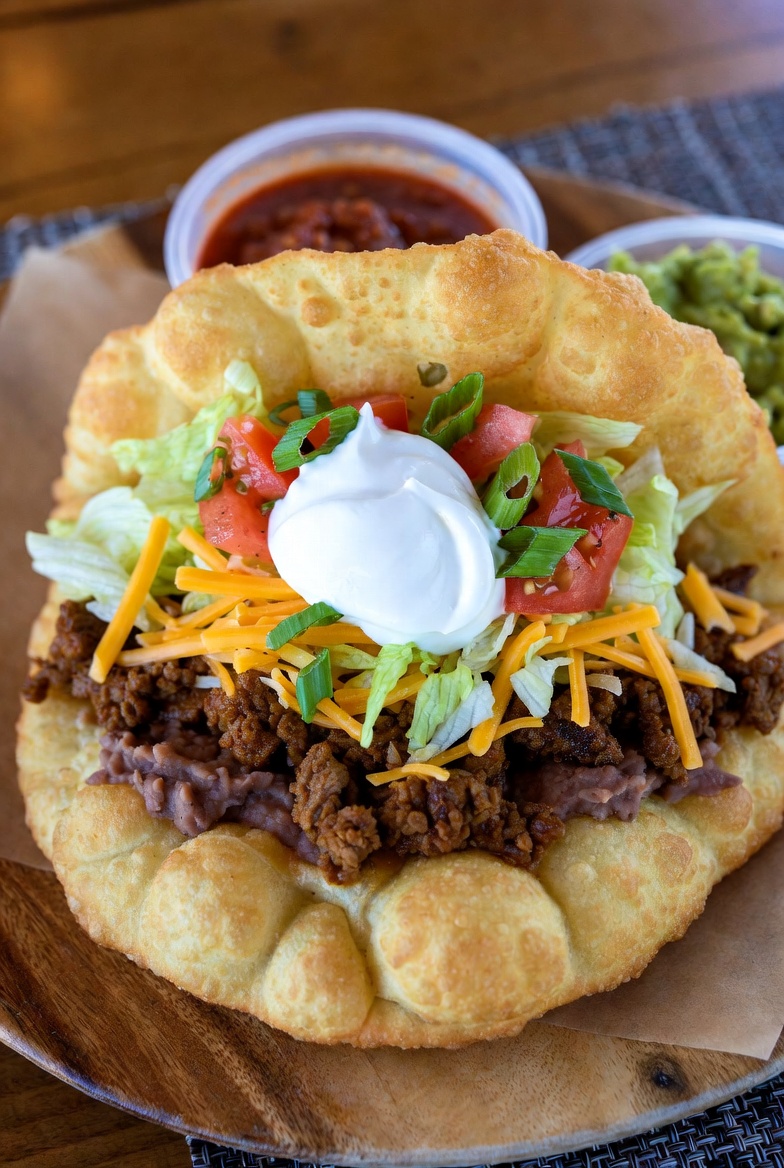
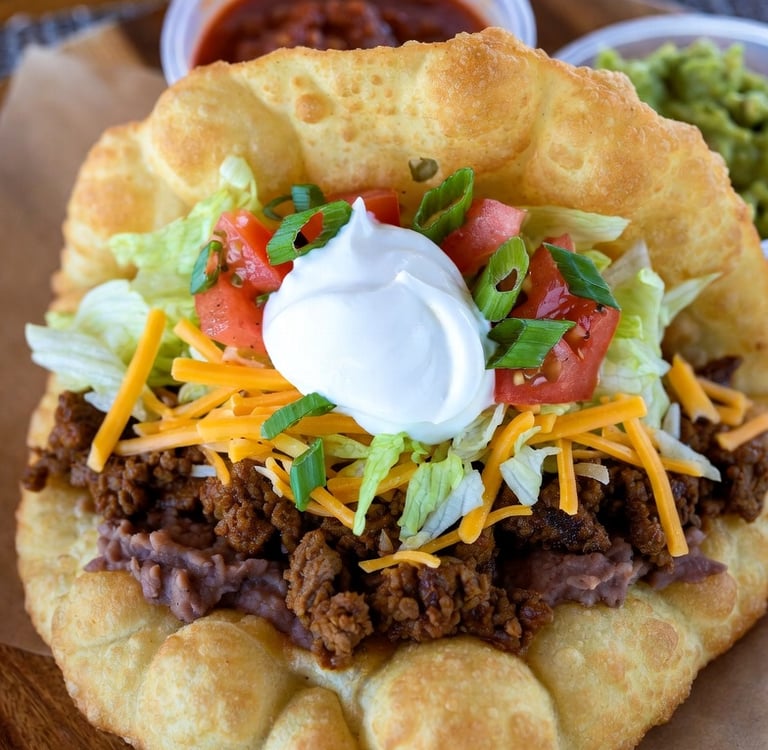
If you see a sign for a "Navajo Taco" (or "Indian Taco"), do not expect a standard corn tortilla. The base is a massive, hubcap-sized piece of freshly fried dough. It is then piled high with seasoned ground beef or shredded meat, beans (often pinto or refried), lettuce, tomatoes, onions, cheese, and sometimes a dollop of green or red chili sauce.
Eating one is an experience. It’s crispy, chewy, savory, and incredibly filling. A good Navajo taco should hold its structure for the first few bites before the warmth of the meat and the moisture of the toppings begin to soften the bread. It is meant to be shared or enjoyed as a hearty meal.
The Sweet Treat
If you’re visiting a state fair, a rodeo, or a casual roadside stand, you are just as likely to find fry bread served as a dessert. In this form, the warm dough is dusted generously with powdered sugar, cinnamon, or drizzled with honey. It shares a textural similarity to a funnel cake or a sopapilla, but it is typically thicker, fluffier, and more substantial. It’s the perfect way to finish off a day of exploring Arizona’s scenic byways.
A Cultural Unifier
Fry bread is more than just "fair food." For many Indigenous communities across the Southwest, it is a centerpiece of social and cultural life. You will almost always find it at powwows, intertribal fairs, and community gatherings.
Historically, these gatherings were restricted or banned by the federal government. Today, the presence of fry bread at a powwow serves as a reclamation of identity. It is a food that brings people together, bridging the gap between generations. When you eat it in these settings, you are participating in a tradition that celebrates not just survival, but the thriving, vibrant reality of modern Indigenous culture in Arizona.
"Fry bread was born in a time of desperation, but it survived as a symbol of endurance."
Where to Find It
If you want to experience authentic fry bread in the Valley, you don’t have to look far.
Fry Bread House in Phoenix is a must-visit. It is not just a restaurant; it’s a legend. In 2012, it became the first Native American establishment to win a James Beard Award in the "America’s Classics" category. It offers a welcoming, unpretentious environment to try both sweet and savory versions, and it’s a perfect starting point for any newcomer.
Roadside Stands & Local Fairs: Keep an eye out for hand-painted signs on the road when you’re driving through northern Arizona or toward reservation lands. These pop-up stands are often where you’ll find the most "authentic" experience, served fresh and piping hot.
Community Events: Check local listings for powwows or Native American cultural festivals. Eating fry bread while surrounded by the music, dance, and art of a powwow offers a depth of context that you simply can't find anywhere else.
A Note on Wellness
As you integrate into Arizona’s food scene, you’ll hear the modern-day conversation surrounding fry bread. Because it is a fried food made from refined ingredients, many health advocates and tribal leaders acknowledge that it is not a "daily" food (Thanks MAHA!). You will find that many people are actively working to restore traditional, nutrient-dense foods (like blue corn and beans) to their diets to combat chronic health issues like diabetes.
When you enjoy fry bread, treat it as a special occasion, a celebration of culture and history rather than a standard staple. By being a mindful eater, you show respect both to the tradition of the food and the health of the communities that created it.
Your Arizona Table
Moving to a new state is about more than just changing your address; it’s about learning the stories of the people who were here long before you. When you sit down with a piece of fry bread, take a moment to consider the history behind that golden dough. You are participating in a story of survival, innovation, and pride that defines the spirit of Arizona.
Welcome to the desert. We hope you enjoy the taste of its history.
Recent Articles
Daily Phoenix © 2026
Daily Phoenix is an online magazine that keeps you up to date on what matters.
Reframe your inbox
Subscribe to our newsletter and never miss a story.
We care about your data in our privacy policy.