
Arizona’s Superfood Secrets: The Desert’s Hidden Bounty
Unlock the nutritional power of the Sonoran Desert. From the sweet, vibrant fruit of the prickly pear to the protein-packed seeds of the ironwood, discover how to forage Arizona’s native superfoods responsibly and bring the flavors of the wild into your own kitchen.
JULY 2026THE TABLESOUND MIND LIVING
Introduction to Arizona's Superfoods
To the uninitiated, the Sonoran Desert might look like a landscape of survival—a place where life hunkers down to endure extreme heat and scarce water. But to those who know where to look, it is a larder of unparalleled abundance. Building on the foundation of the humble mesquite bean, our desert landscape offers a staggering array of "superfoods" that have nourished indigenous cultures for centuries.
From the vibrant, magenta fruit of the prickly pear to the protein-rich beans of the ironwood, these native edibles are not just remnants of the past; they are a blueprint for a sustainable, localized, and hyper-nutritious future.
Beyond the Mesquite: A Forager’s Pantry
If you have already begun incorporating mesquite flour into your kitchen, you’ve taken the first step into a world of "grassroots gastronomy". However, the desert has so much more to offer.
modern kitchen.
1. The Prickly Pear (Opuntia spp.)
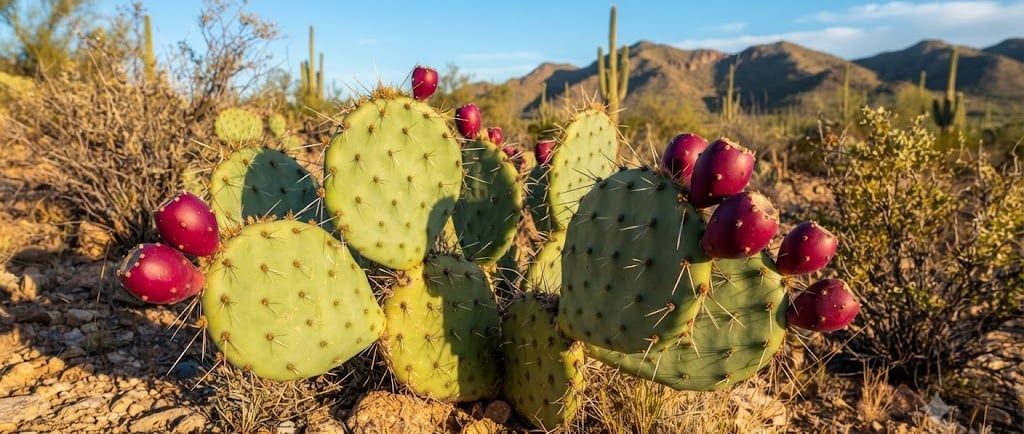
Perhaps the most iconic desert edible, the prickly pear is as generous as it is protected.
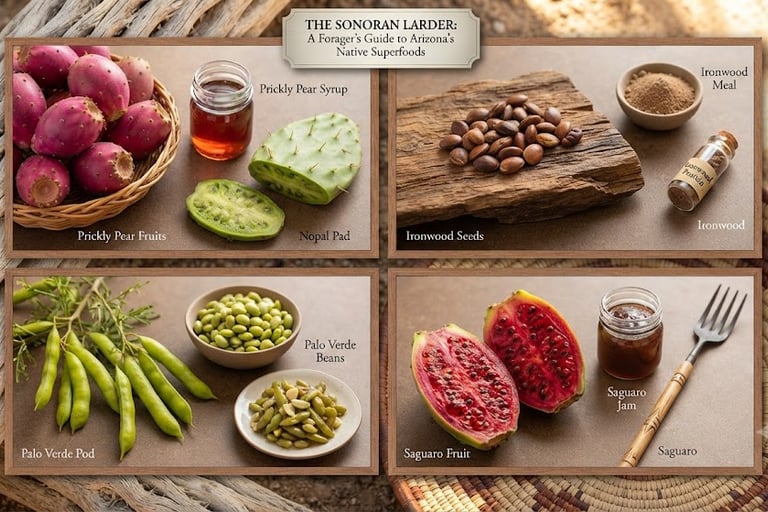
The Fruit (Tunas): Ripening in late summer, these deep magenta fruits are a powerhouse of vitamins A and C. They are naturally sweet and can be eaten raw, juiced, or boiled into a vibrant syrup used for everything from margaritas to candy.
The Pads (Nopales): Often overlooked by beginners, the young green pads are a staple vegetable. Once the spines and glochids (tiny, hair-like needles) are meticulously removed, they can be grilled, sautéed, or added to stews, offering a texture similar to green beans with a bright, citrusy finish.
2. The Ironwood (Olneya tesota)
Often called the "guardian of the desert" for the shade and shelter it provides, the ironwood tree is also a source of incredible nutrition.
The Beans: Ironwood seeds are a true superfood, containing about 32% protein. When dried and brown on the tree, they can be harvested and processed. Because they contain tannins, they require proper preparation—usually boiling or roasting—to mellow their flavor, which is often compared to peanuts, soybeans, or hazelnuts.
3. Palo Verde (Parkinsonia spp.)
Cactus Kelly, a well-known desert forager, affectionately calls palo verde pods "desert edamame". These bright green pods appear in late spring and early summer. The beans inside are tender, sweet, and can be eaten raw or lightly cooked, making them a perfect, nutrient-dense snack while out on the trails.
4. Saguaro Fruit (Carnegiea gigantea)
The fruit of the Saguaro is a brief, magical window of opportunity in June. Ruby-red and sweet, it tastes faintly of strawberries. Historically, this harvest was a momentous occasion for local tribes, celebrated with songs and ceremonies. Today, the pulp and seeds can be made into jams, wines, and syrups.
Responsible Foraging: A Code of Ethics
Foraging in the Sonoran Desert is not just about gathering food; it is an act of stewardship. Because the desert ecosystem is fragile, how you harvest is just as important as what you harvest.
Positive Identification is Non-Negotiable: Never consume a plant unless you have positively identified it by its botanical name. Many desert plants have poisonous look-alikes. Use reputable guidebooks, such as Food Plants of the Sonoran Desert by Wendy C. Hodgson, or join a guided plant walk to learn from experts.
Leave Enough for the Desert: The golden rule of foraging is to leave plenty for the wildlife and the plant’s own regeneration. Never take all the fruit from a single plant; if you harvest 20% and leave 80%, you are contributing to the health of the ecosystem.
Know Your Location: It is illegal to collect fruit or plants from private property without permission, as well as in designated protected areas like State or National Parks. Always verify land-use rules before you start.
Avoid Roadsides: Foraging near heavily traveled roads is a major "don't." Plants in these areas often absorb toxins from vehicle emissions and road dust.
Safety First: The desert is beautiful but biting. Always wear protective clothing (long sleeves, pants, and sturdy boots), carry plenty of water, and stay alert for rattlesnakes or other animals resting in the shade.
Getting Started
The best way to start your desert foraging journey is to "follow one plant through the seasons". Pick one easily recognizable species—like the prickly pear—and learn everything about its lifecycle, from the spring blossoms to the summer fruit.
As you learn to see the desert as a living pantry, your relationship with this landscape will change. You will move from being a visitor in a harsh environment to a participant in a rich, ancient, and deeply nourishing ecosystem. Whether you’re grinding mesquite pods into flour or carefully harvesting ironwood beans, you are participating in a local tradition that is as resilient as the desert itself.
For those interested in hands-on learning, organizations like Desert Harvesters offer excellent resources, community guides, and recipes to help you integrate these native superfoods into your
Recent Articles
Daily Phoenix © 2026
Daily Phoenix is Arizona’s premium digital magazine for faith‑forward leadership, community resilience, and local governance.
Reframe your inbox
Subscribe to our newsletter and never miss a story.
We care about your data in our privacy policy.