
Enhancing Desert Landscaping with Smart-Home Irrigation: A Desert AI Guide
Moving beyond rigid timers, Phoenix homeowners are turning to adaptive, local-processing technology to protect turf and foliage through the peak of the summer heat.
JULY 2026THE AGENDA


Introduction to Smart-Home Irrigation
Disclosure: This article has sponsored content produced in partnership with our brand partners.
For Phoenix residents, July and August represent the ultimate stress test for residential landscaping. As monsoon humidity clashes with extreme heat spikes, maintaining a resilient yard feels like a constant battle against rapid evaporation. Traditional time-based irrigation systems—long the primary culprit behind inflated utility bills and water waste—are increasingly giving way to a more sophisticated approach: sensor-driven, local-processing automation.
The next evolution in residential landscape management is the integration of Edge AI and intelligent, sensor-driven automation. By moving the "brain" of your irrigation system from a static timer to an adaptive, local-processing unit, you can transform your home into a resilient, water-wise sanctuary.
The Shift to Edge AI: Why Local Processing Matters
In the world of smart home technology, we are accustomed to "cloud-based" systems. However, cloud-dependent irrigation can be unreliable in areas with connectivity issues or when large volumes of data need to be analyzed in real-time. This is where Edge AI—artificial intelligence that processes data locally on the device itself—changes the game.
What is Edge AI in Irrigation?
Edge AI systems use small, embedded processors to collect and analyze data from soil moisture sensors, weather stations, and flow meters right in your yard. Instead of sending raw data to a distant server to "ask" if it should water, the device makes an instantaneous, intelligent decision.
Low Latency: Decisions about whether to water are made in milliseconds. If a sudden wind gust spikes or a sensor detects an immediate drop in soil moisture, the system reacts immediately.
Security & Reliability: Since the data stays on your local network, your system remains functional even if your Wi-Fi or internet connection flickers.
Precision: By analyzing hyper-local micro-climate data, Edge AI algorithms can identify subtle patterns—such as the rate of evapotranspiration in your specific garden bed—to calculate the exact "plant factor" needed for your specific desert vegetation.
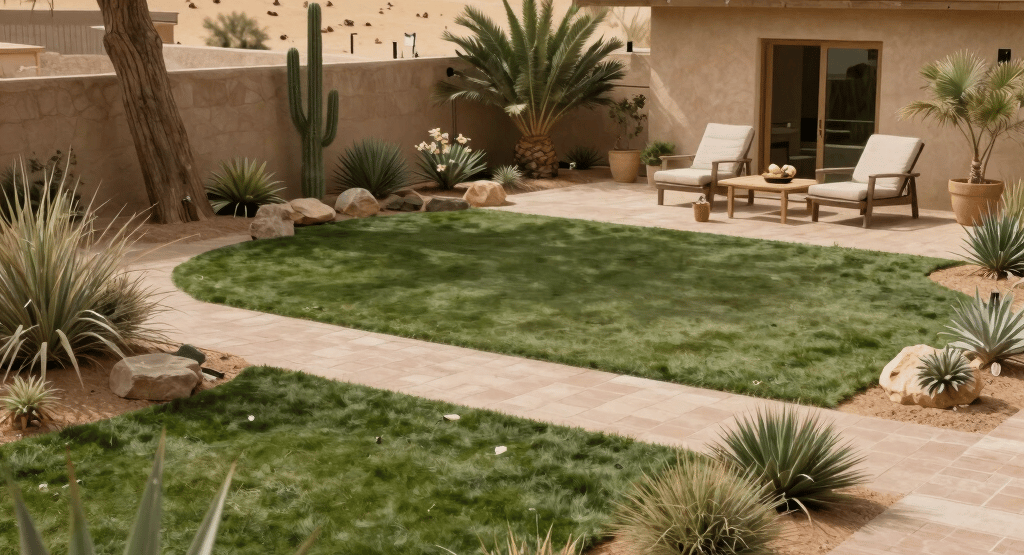
Designing Your Smart-Home Irrigation Strategy
1. Establish Hydrozones
The foundation of any efficient system is the concept of hydrozoning. Do not irrigate your entire property as one single zone. Instead, group your plants by their specific water needs:
High-Water Zone: Turf or vegetable gardens.
Moderate-Water Zone: Citrus trees or seasonal ornamentals.
Low-Water/Drought-Tolerant Zone: Native shrubs, agaves, and desert-adapted perennials.
A smart controller allows you to program each zone differently, ensuring you aren't overwatering your drought-tolerant succulents just to keep a small patch of grass alive.
2. Implement Precision Hardware
To feed your AI system the best data, you need the right inputs:
Soil Moisture Sensors: These act as the "truth" layer. Even if the forecast calls for heat, if your sensors detect that the soil is still saturated from a previous monsoon event, the system will skip the cycle.
Flow Sensors: These are your primary defense against "silent" leaks. A smart system monitors the volume of water moving through the pipes; if it detects an unusual surge (signaling a broken pipe or emitter), it can shut off that specific zone and send an alert to your smartphone.
Drip Irrigation: In the Sonoran Desert, overhead spray is often inefficient due to extreme evaporation. Transitioning to drip systems delivers water directly to the root zone, reducing waste by as much as 30–50%.
3. Leverage "Weather-Aware" Controllers
Modern smart controllers, such as those that are EPA WaterSense labeled, use local meteorological data to adjust schedules daily. During the monsoon, these systems "talk" to your local weather stations; if rain is predicted, they automatically adjust your run times or pause the system entirely.
Maintaining Your System During the Peak Heat of July and August
The desert summer is unforgiving, and your irrigation system is under constant thermal stress. To keep it running through the peak of the season:
Shift to Early Morning/Late Evening: Always schedule your watering for the coolest part of the day (usually 4:00 AM to 7:00 AM) to minimize water loss through evaporation.
Cycle and Soak: For areas with heavy clay or caliche soil, water cannot penetrate the surface instantly. Program your system to run in shorter, multiple bursts—"cycle and soak"—to ensure water reaches the deep roots rather than running off into the street.
Monitor for Mineral Build-up: Phoenix is known for "hard" water. High mineral content can clog emitters and aerators. Part of your "smart" maintenance plan should include a quarterly inspection to clear calcium deposits from your drip emitters and sprinkler heads.
Mulch is Your Best Friend: Applying a 2–3 inch layer of organic or inorganic mulch around your plants acts as a "thermal blanket." It keeps the soil temperature lower and significantly reduces the speed at which moisture evaporates from the surface.
"By moving away from 'set it and forget it' timers and embracing Edge AI-driven irrigation, you are doing more than just saving on your monthly utility bill—you are actively participating in the stewardship of our desert environment."
The Bottom Line: Sustainability Meets Efficiency
By moving away from "set it and forget it" timers and embracing Edge AI-driven irrigation, you are doing more than just saving on your monthly utility bill—you are actively participating in the stewardship of our desert environment.
A well-designed smart system acts as a guardian for your landscape. It protects your investment in your home’s curb appeal, improves the health of your desert-adapted plants, and ensures that every drop of water is used with purpose. Whether you are a DIY enthusiast looking to install a few sensors or a homeowner ready to overhaul your system with professional-grade smart controls, the technology is now sophisticated enough to make "water-wise" gardening both easy and highly effective.
For more tips on local water resources, visit the City of Queen Creek's guide on Smart Irrigation Controllers or explore professional audits provided by local specialists like Peak Plumbing Phoenix. For more information on Arizona's regional water security landscape check out our latest article.
Editor’s Note: While technology gives us the tools to manage our resources, our collective commitment to these practices is what truly secures our Valley’s water future. If you’ve implemented a smart irrigation system recently, share your results—or your biggest 'water-wise' challenges—in the comments below. Let’s keep the conversation going.
Recent Articles
Daily Phoenix © 2026
Daily Phoenix is Arizona’s premium digital magazine for faith‑forward leadership, community resilience, and local governance.
Reframe your inbox
Subscribe to our newsletter and never miss a story.
We care about your data in our privacy policy.